Five Levels. Infinite Paths Towards Mastery.
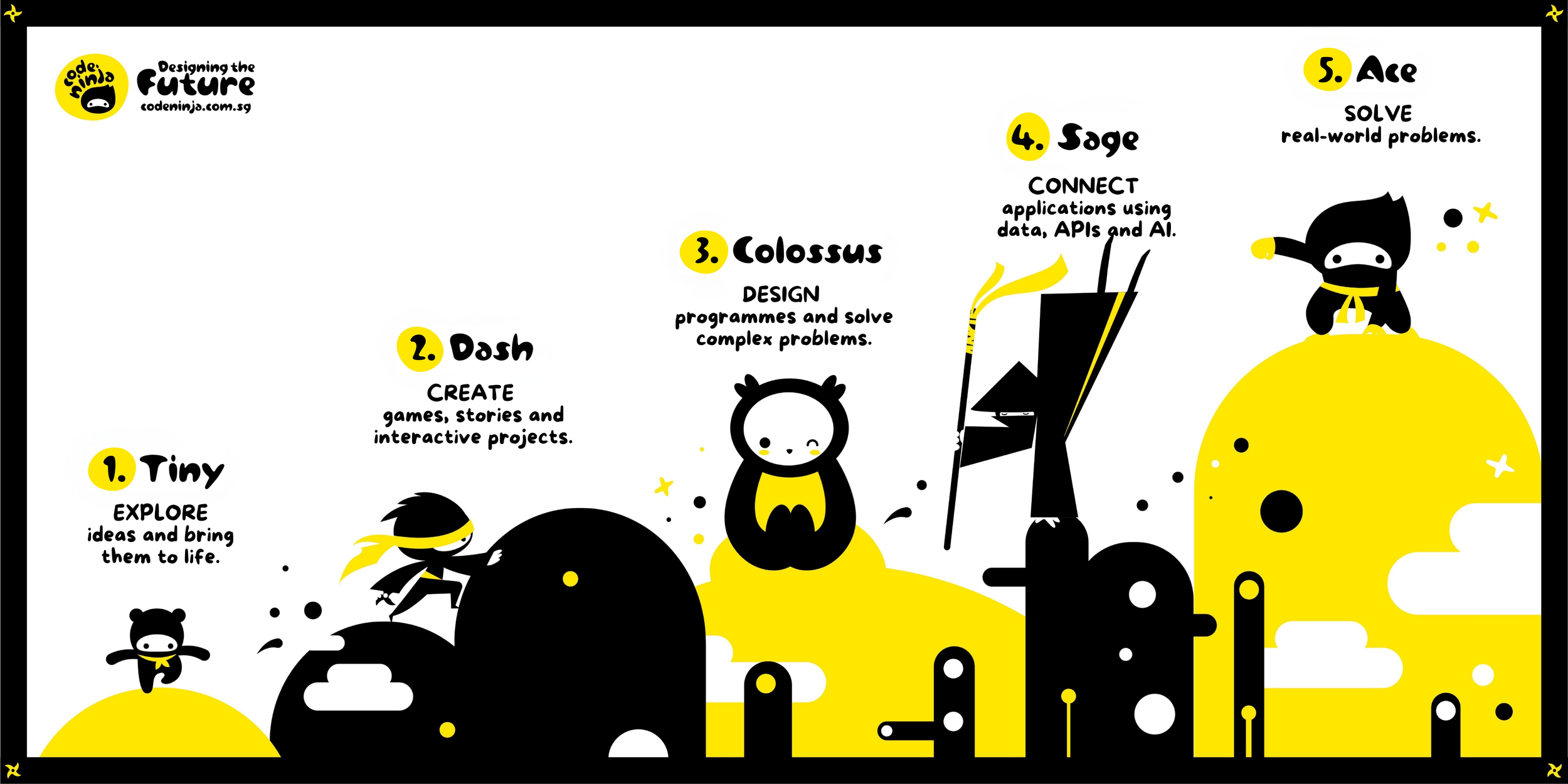
Code Ninja's five levels: Tiny explores, Dash creates, Colossus designs, Sage connects, Ace solves real-world problems.

Every student follows the same five levels: Explore, Create, Design, Connect, Solve. Their learning path however, is unique and individual. It is one that is co-created with the instructor based on their strengths, interests and starting point. Students move to the next level when they're ready — not because of their age or how long they've been attending.

Ages 9–12 · In person and online · Weekly classes · Six students maximum

More Than Learning Scratch & Python. Real World Skills in Technology.

Google

From Level 3 onwards, selected topics draw on Google's Professional Certificate pathways in Data Analytics, UX Design and AI, adapted for younger learners and integrated into coding projects. The Coding Mastery Programme remains Code Ninja's own curriculum.


Two Starting Points, Same Programme.


Younger students start visually, with Scratch, before moving into Python. Older students start directly in Python. Both follow the same five levels toward the same kind of independent, real work.

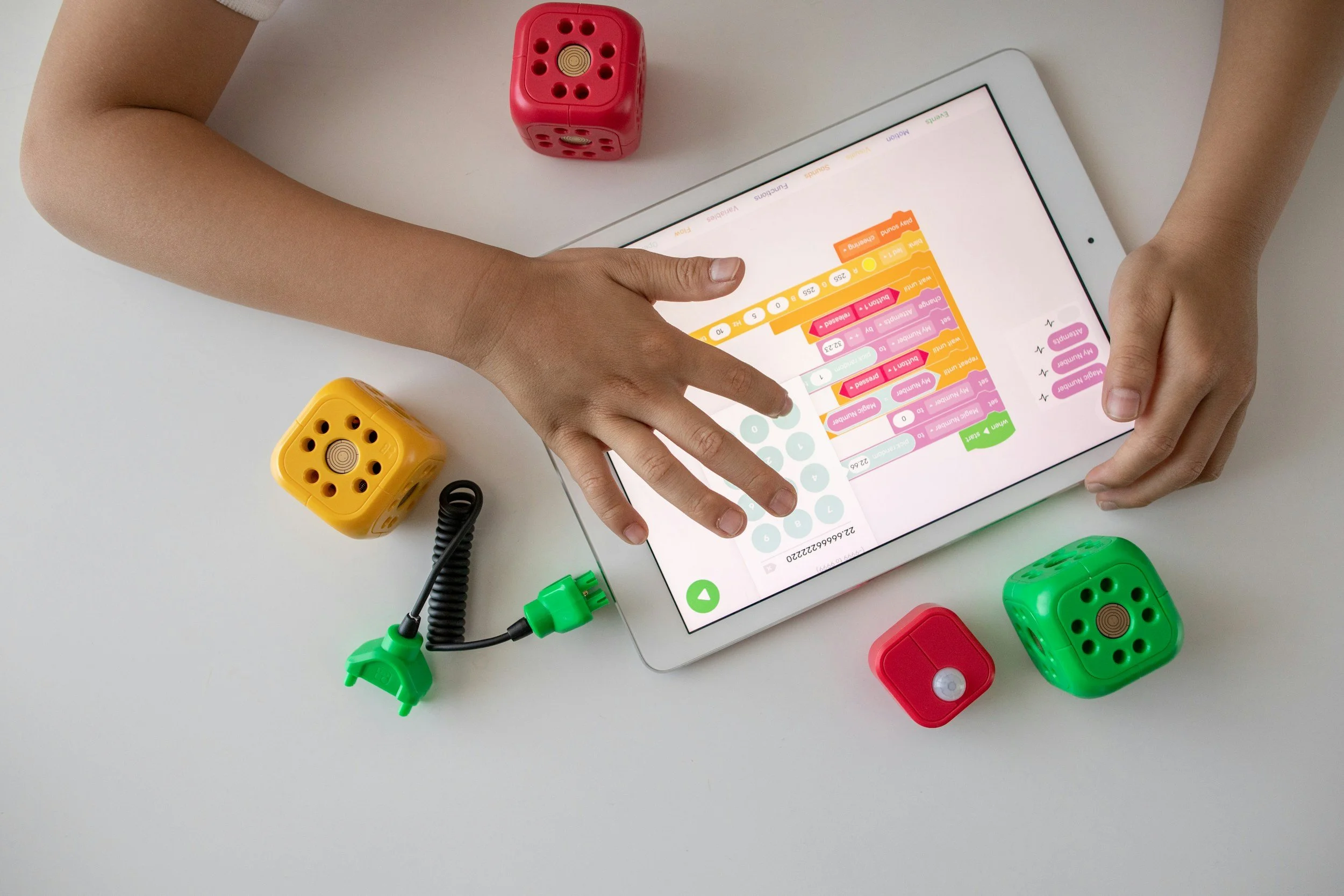
Child dragging Scratch blocks on a tablet beside coloured robot cubes

Ages 9 to 12

Scratch is the starting point. Not the destination. (You're here)

Ages 13 to 16

The goal is not simply knowing Python. It is knowing what to do with it. [Explore Ages 13–16]

Scratch Is the Starting Point. Not the Destination.

For ages 9 to 12, coding starts visually. Your child builds real logic before they meet a single line of syntax, then moves into Python when they're ready for it.

A Visual Way to Think Like a Programmer

In Scratch, your child builds with blocks instead of typing lines of code. What looks simple is real programming logic underneath: sequencing, cause and effect, breaking a big problem into steps that work in order. That's the thinking Python needs later. Scratch teaches it before syntax gets in the way.

From Scratch to Python

Most students move into Python around Level 3, once the logic is solid. From there: larger projects, and more independent problem-solving. They move up when they're ready, not because a term ends.

One Trial Class. Satisfaction or Your Money Back.

A trial class is the fastest way to find out where your child should start. Ninety minutes, one real project, and afterwards we tell you what we noticed: where they were confident, where they got stuck, and where to begin.

Choose a time that works for your family. Each trial class is 90 minutes.

Friday In person
4:00 pm
6:30 pm
Saturday In person
9:30 am
11:30 am
Sunday In person
9:30 am
11:30 am
Weekend (Online) Saturday & Sunday
4:00 pm
 

Our Commitment

Your trial fee counts toward your first package if you enrol. Not right for your child? Full refund within 48 hours.